AHA BHA PHA: The Complete Guide to Chemical Exfoliants
If there is one skincare step that can really change how your skin looks and feels, it is exfoliation. By removing the dead skin cells that build up on the surface, it improves texture, brightness, and helps your other products absorb better. And I am not talking about those harsh physical scrubs that scratch up your face. I am talking about chemical exfoliants, the kind that dissolve dead skin cells without you having to rub anything.
But here is the thing. When you start looking into chemical exfoliants, you are immediately hit with a wall of acronyms. AHA. BHA. PHA. Glycolic acid. Salicylic acid. Mandelic acid. Lactic acid. It is a lot. And if you do not know what each one does or which one is right for your skin, it is easy to either pick the wrong one or just give up entirely.
To be honest, before I properly familiarized myself with how these ingredients work, I went straight for glycolic acid because we have a tendency to think stronger means better results. And I know some may think that scrubs with those small grains are the best, because then you can actually feel how your skin is getting peeled, right? I totally understand it and I used to prefer those as well. But while there are still those kind of physical scrubs available and some gentle ones out there, I would still recommend going with a chemical exfoliant. The right exfoliant at the right strength matters way more than just going for the most powerful option. And here is the tricky thing. When you scrub your face with a harsh product, it might feel softer and smoother right after, and therefor you might connect it with that ”oh this is working the best for my skin”. But I am talking about the long run here. Regularly using harsh physical scrubs can weaken your skin barrier over time, and the effects of that, like increased sensitivity, redness, and even early signs of aging, do not always show up right away. You might not connect the dots until much later.
So let me break it all down for you. What AHAs, BHAs, and PHAs actually are, how they work, which one is best for your skin, and how to use them without irritating your face in the process.
What Is Chemical Exfoliation
First, let me explain what chemical exfoliation actually means, because the word “chemical” can sound a bit scary.
Your skin naturally sheds dead skin cells, just as it should. But sometimes that process slows down, whether it is because of aging, sun damage, dehydration, or just your skin type. When dead skin cells build up on the surface, your skin can start looking dull, feeling rough, and your products stop absorbing properly. Breakouts can also happen more frequently because those dead skin cells clog your pores.
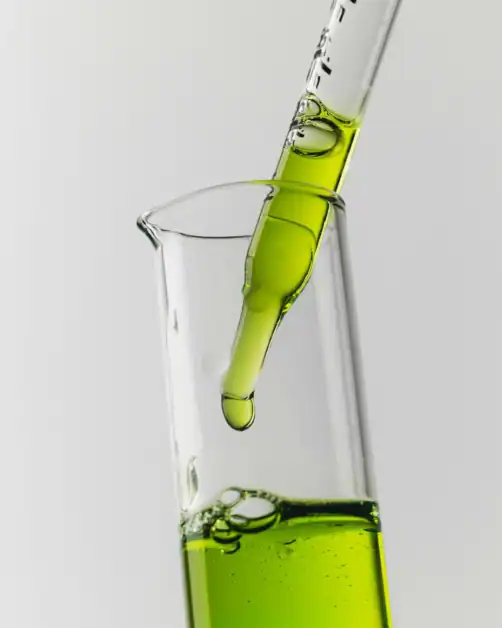
Chemical exfoliants are ingredients that help dissolve the bonds holding those dead skin cells together, allowing them to shed more easily. Instead of physically scrubbing them off, which can be harsh and cause irritation, chemical exfoliants do the work gently on a cellular level.
Think of it like this. Physical exfoliation is like using sandpaper on a piece of wood. It works, but it can leave scratches if you are not careful. Chemical exfoliation is more like using a gentle solvent that dissolves the rough outer layer smoothly. Both achieve the same goal, but the chemical approach tends to be more even and less likely to cause damage.
What Are AHAs
AHA stands for alpha hydroxy acid. These are water-soluble acids that work on the surface of your skin. They are best known for improving skin texture, fading dark spots and hyperpigmentation, smoothing fine lines, and giving your skin that fresh, glowing look.
The most common AHAs in skincare are glycolic acid, lactic acid, and mandelic acid. They all belong to the same family but they have different strengths and work slightly differently.
Glycolic acid
Is the most popular and the most powerful of the group. It has the smallest molecule size, which means it penetrates the deepest and works the fastest. This makes it incredibly effective, but it also means it is the most likely to cause irritation, especially if your skin is sensitive or if you jump in with a high concentration too early. Glycolic acid is amazing for rough, dull skin, uneven texture, fine lines, and hyperpigmentation.
Lactic acid
Is gentler than glycolic acid because it has a slightly larger molecule. It still exfoliates the surface of the skin, but it also has hydrating properties, which makes it a great choice if your skin is normal or on the drier side. Lactic acid is a good starting point if you are new to chemical exfoliation and want something effective but less intense.
Mandelic acid
Has the largest molecule of the three, which means it penetrates the slowest and is the gentlest option. It is excellent for sensitive skin and for anyone prone to post-inflammatory hyperpigmentation, which is when your skin leaves dark marks after irritation or breakouts. If your skin reacts to everything, mandelic acid might be your best friend.
AHAs work best when your skin’s pH is on the lower side, which is why many AHA products are formulated at a pH of around 3 to 4. Your skin’s natural pH is around 4.7 to 5.5, so AHA products are slightly more acidic, which is how they do their job. This is also why they can cause tingling or slight stinging when you first start using them, and that is completely normal as long as it goes away within a minute or so. If it burns or does not stop, wash it off.
What Is BHA
BHA stands for beta hydroxy acid, and in skincare, this almost always means salicylic acid. While AHAs work on the surface of the skin, BHA is oil-soluble, which means it can actually penetrate into your pores and work from the inside out.
This is what makes BHA so special for anyone dealing with breakouts, blackheads, whiteheads, or congested skin. It gets into the pore, dissolves the buildup of oil and dead skin cells, and helps clear things up from the inside out.
BHA also has anti-inflammatory properties, which means it calms redness and irritation while it exfoliates. This makes it a really good option if your skin is acne-prone but also sensitive. It does the job while keeping your skin calm.
Salicylic acid is typically used at concentrations of 0.5 to 2 percent in skincare products. Even at lower concentrations, it can be very effective because it works directly inside the pore.
If your main concerns are breakouts, blackheads, or visible pores, BHA is probably the one you should go for. If your concerns are more about dullness, texture, and fine lines, AHA is the better choice. And if you deal with both, you can use them on different days. I will explain how to do that later in this post.
What Are PHAs
PHA stands for polyhydroxy acid, and this is the newest and gentlest member of the exfoliant family. PHAs include ingredients like gluconolactone and lactobionic acid.
PHAs work similarly to AHAs, exfoliating the surface of the skin to improve texture and tone. But the key difference is that PHA molecules are much larger. Because they are bigger, they do not penetrate as deeply, which means less irritation.
On top of the exfoliating benefits, PHAs also have humectant properties which means they attract and hold water in the skin, so they actually hydrate while they exfoliate. That is a pretty amazing combination, especially if your skin is dry or dehydrated.
PHAs are also antioxidants, which means they help protect the skin from environmental damage. And they do not increase your skin’s sensitivity to the sun as much as AHAs do, which is a nice bonus. You should still wear SPF every day regardless, but it is good to know.
If you have very sensitive skin, rosacea, eczema, or if you have tried AHAs and found them too irritating, PHAs are worth trying. They give you the benefits of exfoliation without the harshness.
Honestly, PHAs do not get enough attention. They are the underdog of chemical exfoliants, and I think they deserve way more love than they get.
AHA vs BHA vs PHA: Which One Should You Choose
Here is the simplest way to think about it.
Choose an AHA if your main concerns are dullness, uneven skin tone, hyperpigmentation, fine lines, or rough texture. AHAs work on the surface and are great at revealing brighter, smoother skin.
Choose a BHA if your main concerns are breakouts, blackheads, clogged pores, or excess oil. BHA goes deeper into the pores and clears them out from the inside.
Choose a PHA if your skin is sensitive, reactive, or prone to conditions like rosacea or eczema. PHAs give you gentle exfoliation with added hydration and less risk of irritation.
And here is the thing, you do not have to pick just one forever. Your skin changes with the seasons, with stress, with hormones, with everything really. You might use an AHA in winter when your skin is dull and dry, and switch to a BHA in summer when your pores are more congested from heat and sweat. Or you might use BHA a couple of nights a week and AHA on other nights. The key is listening to your skin and adjusting as needed.
How to Start Using Chemical Exfoliants
If you have never used a chemical exfoliant before, please do not do what I did and go straight for the strongest option. Start slow. I am serious.
Here is how I would recommend starting:
Pick one exfoliant. Do not try to use AHA and BHA and PHA all at once. Choose the one that best matches your main skin concern at the moment and start there.
Start with a low concentration. If you are going with an AHA, start with lactic acid or a low-percentage glycolic acid, something around 5 to 8 percent. For BHA, 0.5 to 1 percent is a great starting point. For PHA, most products are already formulated to be gentle, so you are usually fine with whatever concentration the product offers.
Use it once or twice a week at first. I know the temptation is to use it every night for faster results, but your skin needs time to adjust. And honestly, you do not want your skin to break out because of over-exfoliating. If you are using an AHA or BHA, start with once a week for the first two weeks, then increase to twice a week, and eventually work up to three or four times a week if your skin tolerates it well. PHAs are the exception here. Because they are so gentle and hydrating, most skin types can tolerate them daily if the product is well formulated.
Apply it at night. Chemical exfoliants, especially AHAs, can make your skin more sensitive to the sun. Using them in the evening gives your skin time to recover overnight. And always, always wear SPF the next morning. This is non-negotiable when you are using any kind of exfoliant.
Do not mix with other strong actives. When you are using a chemical exfoliant, avoid using retinol or retinal on the same night. Layering too many actives at once can overwhelm your skin and damage the barrier. If you want to use both, alternate nights.
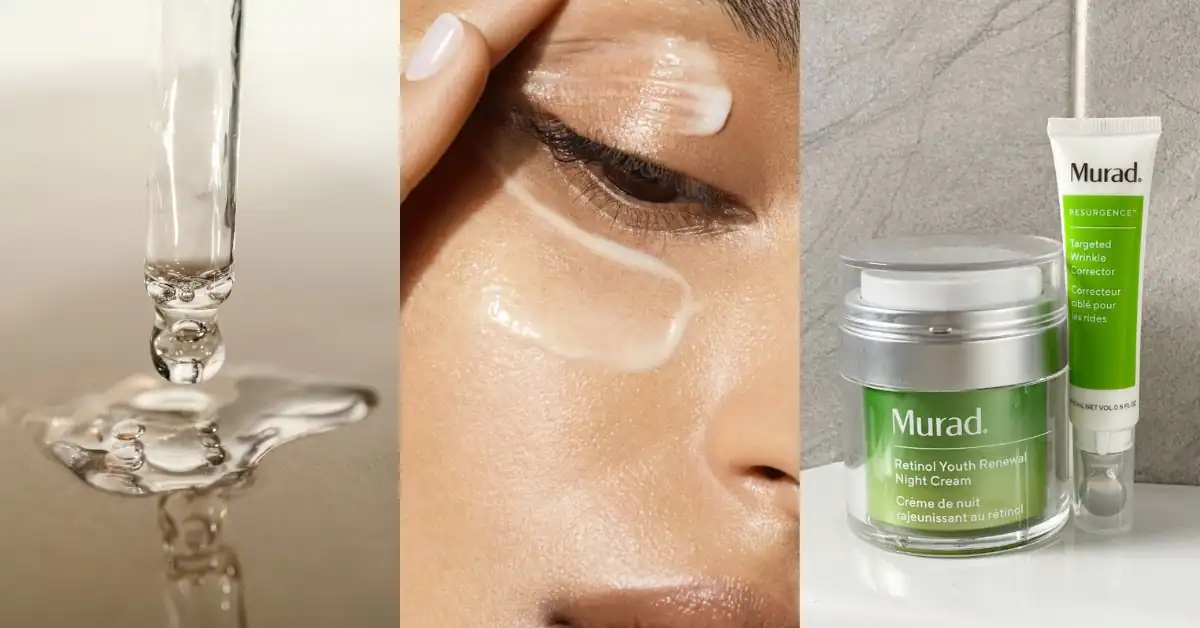
Want to know the difference between retinol and retinal? Read more by pressing the link below:
Signs You Are Over-Exfoliating
Remember, more exfoliation does not mean better skin. There is a sweet spot, and going past it can actually make everything worse.
Signs that you are over-exfoliating include but are not limited to your skin feeling tight and dry even after moisturizing, increased redness or sensitivity, a stinging sensation when you apply products that normally feel fine, breakouts getting worse instead of better, and your skin looking shiny in a way that feels almost waxy rather than dewy.
If you notice any of these signs, stop all exfoliants immediately and focus on repair. Use gentle, hydrating, barrier-supporting products for at least a week or two until your skin calms down. Then reintroduce your exfoliant slowly, at a lower frequency.
I have over-exfoliated my own skin before, and let me tell you, it takes time before your skin returns to its normal state. Lesson learned.
Want to learn more about how to protect and repair your skin barrier? Read more by pressing the link below:
What About Physical Exfoliants
I am not against physical exfoliation completely. There is a time and place for it. But I think chemical exfoliants are a better option for most of us most of the time.
The problem with physical scrubs is that it is very easy to apply too much pressure, especially around sensitive areas like the cheeks and around the eyes. And many scrubs use ingredients with rough, uneven edges that can create tiny tears in the skin. You might not feel them, but over time, this can lead to irritation, redness, and a weakened skin barrier.
If you do like physical exfoliation, go for something with smooth, round particles and use a very light touch. A soft washcloth or a konjac sponge can also provide gentle physical exfoliation without being too harsh.
But if I had to choose one approach, I would go with chemical exfoliation every time. It is more controlled, more even, and you can target specific concerns more effectively.
Product Formats
Chemical exfoliants come in different product formats, and each has its advantages.
Cleansers with chemical exfoliants are a gentle option as the contact time is shorter. The product is on your skin for maybe thirty seconds to a minute before you rinse it off. This can be a good way to introduce chemical exfoliation if you are not sure where to start.
Toners and essences are probably the most popular format. They are easy to apply, absorb quickly, and work well as part of a multi-step routine. You apply them after cleansing and before your serums and moisturizer.
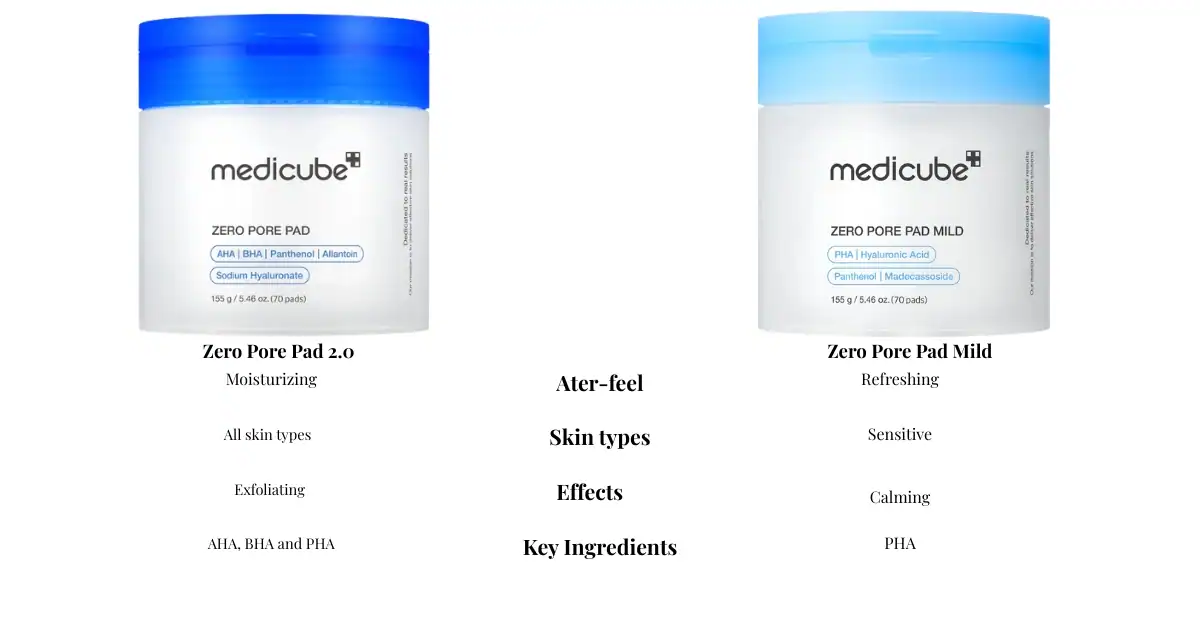
The Medicube Zero Pore Pads come in two versions.
The Zero Pore Pad 2.0 contains AHA, BHA, and PHA and is suited for all skin types. This one provides a deeper exfoliation while still being moisturizing.
The Zero Pore Pad Mild contains PHA and is designed for sensitive skin. It calms and refreshes the skin while gently refining the texture. A great option if your skin is reactive or if you want something very gentle for everyday use. This one is currently included in my skincare routine, and I really love the feeling it leaves on my skin.
Both have two sides. Start with the textured side and gently swipe it across your face. Then flip to the smooth side and swipe again for toning. That is it.
You can find the Zero Pore Pad 2.0 here and the Zero Pore Pad Mild here.
(This post contains affiliate links, which means I may earn a small commission if you purchase through them, at no extra cost to you.)
Serums tend to have higher concentrations and can be more targeted. These are good if you want a stronger treatment and your skin can handle it.
Masks and peels are the most intense format. These are meant to be used once a week or less and provide a deeper exfoliation. They are great as a weekly treatment but should not replace your regular exfoliant.
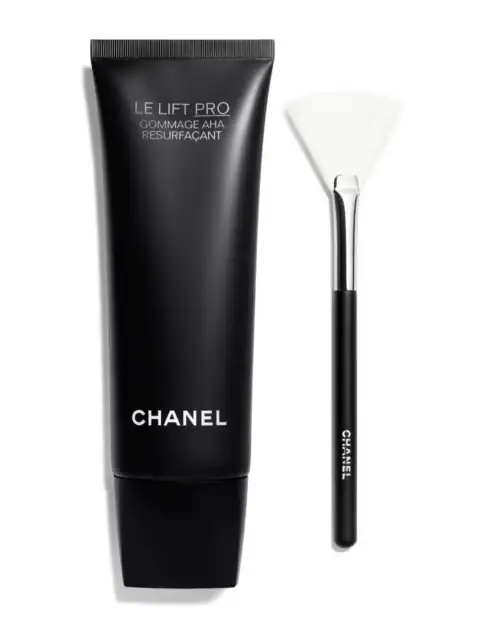
One mask I have personally tried and really enjoyed is the Chanel Le Lift Pro Gommage AHA Resurfaçant. It corrects, exfoliates, and resurfaces the skin beautifully. I want to be honest though, it is on the pricier side at around 200€, so it is definitely a luxury treat rather than an everyday essential. But if you want to splurge on a weekly AHA treatment, it is a lovely one. You do not need to spend this much to get good results though. There are plenty of effective and affordable AHA masks out there.
For beginners, I would start with either an exfoliating toner or a cleanser. Once your skin is comfortable with that, you can explore stronger formats if you want to.
Common Questions
Can you use AHA and BHA together?
Yes, but be careful. Some products are formulated with both, and those are fine because the concentrations are balanced. But I would not recommend layering two separate strong AHA and BHA products on the same night, especially if you are new to chemical exfoliants. A better approach is to alternate them on different nights.
How long until you see results?
You should start noticing smoother, brighter skin within about two to four weeks of consistent use. Deeper concerns like hyperpigmentation and fine lines take longer, usually six to twelve weeks. Be patient and stay consistent.
Can you use chemical exfoliants with retinol?
Yes, but not on the same night. Alternate between them. For example, you might use your exfoliant on Monday and Wednesday, and retinol on Tuesday and Thursday. This gives your skin the benefits of both without overloading it.
Is tingling normal?
A slight tingle when you first apply an AHA is normal and usually goes away within a minute. If it stings, burns, or the tingling does not stop, rinse it off. That is your skin telling you it is too much.
Do chemical exfoliants thin the skin?
No. This is a common myth. They remove dead skin cells from the surface, but they actually encourage cell renewal underneath, which can make your skin healthier and more resilient over time.
Conclusion
Chemical exfoliants are one of the most effective tools you can add to your skincare routine. Whether you go with an AHA for brightness and smoothness, a BHA for clearing out congested pores, or a PHA for gentle, hydrating exfoliation, there is an option that works for every skin type.
The most important thing is to start slow, listen to your skin, and be patient with the process. Good results take time, and rushing it will only set you back. And when you find the right exfoliant at the right frequency for your skin, the results speak for themselves.
Your skin already knows how to renew itself. Chemical exfoliants just help it do that job a little more efficiently.
If you want help figuring out what your skin actually needs right now, download my free Glow Ritual Guide. It walks you through gentle rituals for different skin moods and helps you build a routine that adapts to how your skin feels.