
UVA vs UVB: What They Do to Your Skin and How to Protect It
While I was sitting on a plane headed to Amsterdam, I started thinking about UVA vs UVB rays and how important suncare really is.
Most of us do not realize it, but even when we are flying above the clouds, UVA rays are still reaching us through the glass. Airplane windows block most UVB rays, but they let a significant amount of UVA through. And at cruising altitude, UV radiation can actually be stronger than on the ground.
With summer just around the corner in Europe, this felt like the perfect time to write about something I have started to appreciate more and more, which is suncare and the real benefits it gives us.
Understanding the difference between UVA vs UVB rays is one of the most important things when it comes to protecting your skin from sun damage.
The sun is both loved and feared. It warms our skin, boosts our mood, and gives us that beautiful glow. But it is also the single most damaging and aging factor for our skin.
So in this post, let me walk you through why suncare matters, how UV rays actually affect your skin, and how you can protect yourself while still enjoying the sun and keeping that glow.

Why Suncare Is Important
Many of us think of sunscreen as something you only need when you are on the beach or on holiday. But the truth is that sun exposure affects our skin every single day, even when it is cloudy, cold, or raining. UV rays can pass through clouds, windows, and even airplane and car glass, which means we are being exposed more often than we think. Up to 80 percent of UVA rays can actually pass through clouds, which is why sunscreen is essential even on overcast days.
Suncare is not just about avoiding sunburn while spending time at the beach.
It is about protecting your skin in the long run from premature aging, pigmentation, and more serious concerns like skin cancer. Understanding the difference between UVA vs UVB is important because UVA rays in particular are one of the biggest contributors to early signs of aging. And the tricky part is that you do not always feel the damage happening.
Your skin might not burn, but the harm is still being done beneath the surface.
By making suncare a daily habit, you are not only keeping your skin safe. You are helping it stay healthy, strong, and glowing for years to come. And the best part? It does not have to be complicated or boring. Once you find the suncare products that fit your skin, it becomes a natural part of your routine.
UVA vs UVB Rays: What Is the Difference
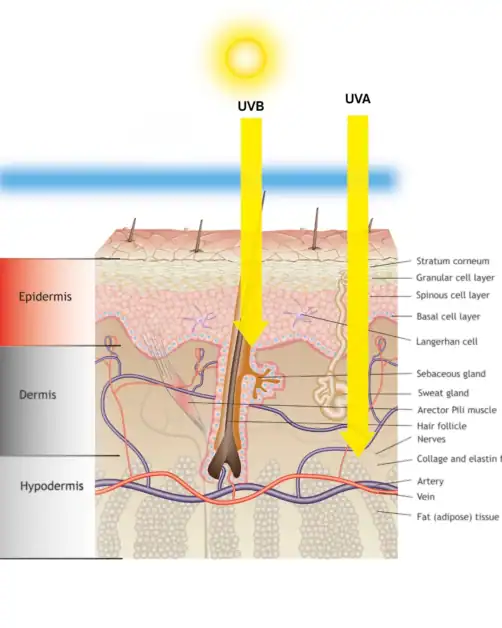
The difference between UVA vs UVB rays is how deeply they penetrate the skin. UVA rays reach deeper layers and contribute to aging, while UVB rays affect the outer layers and are responsible for sunburn.
So what exactly are these rays we are trying to protect ourselves from and what does UVA vs UVB actually mean?
The sun gives off two types of ultraviolet rays that affect the skin. UVA and UVB.
Even though they both come from the same place, they work very differently on our skin.
UVA
As shown in the diagram above, UVA rays penetrate deeper into the skin than UVB rays. UVA rays are the ones responsible for breaking down collagen, causing fine lines and wrinkles, and speeding up the natural aging process.
You might have heard the saying “UVA for aging”, which is a helpful way to remember it. UVA rays are also the ones that pass through glass, so whether you are sitting in a car, near a window, or flying on a plane, you are still being exposed. You will not always feel them, but they are constantly working in the background and slowly affecting your skin’s health.
UVB
UVB rays on the other hand affect the outer layers of the skin. They are the main reason we burn and the ones responsible for that tanned look after being in the sun. “UVB for burning” is another helpful way to remember it. These rays are stronger during the summer months and in the middle of the day, which is why it is so important to be extra careful during those times and why it is recommended to avoid direct sun during peak hours.
Both UVA and UVB rays can damage the skin and increase the risk of skin cancer. But UVA is often considered more harmful long-term because of how deeply it reaches and how often we are exposed without even realizing it. Now that you know the difference between UVA vs UVB, you can see why a broad-spectrum sunscreen that protects against both is so important.
What SPF Actually Means
Now let me talk about tanning and SPF, because this is something a lot of us misunderstand.
One of the biggest myths I hear is that using SPF will stop you from getting a tan.
That is not true. You can still get a tan while wearing sunscreen. The difference is that it will be slower, more even, and most importantly, safer for your skin. Without SPF, you are basically burning your top layer of skin, which is mostly made up of dead skin cells. And that “tan” you worked hours for?
It fades quickly because it is not on the deeper layers of the skin.
I like to compare it to cooking. Imagine frying food without oil. The outside just burns and turns dark while the inside remains raw. But with oil, it cooks slower, evenly and develops a beautiful golden color. That is exactly what sunscreen does for your skin. It helps you tan more gently without frying your skin in the process. Makes sense, right?
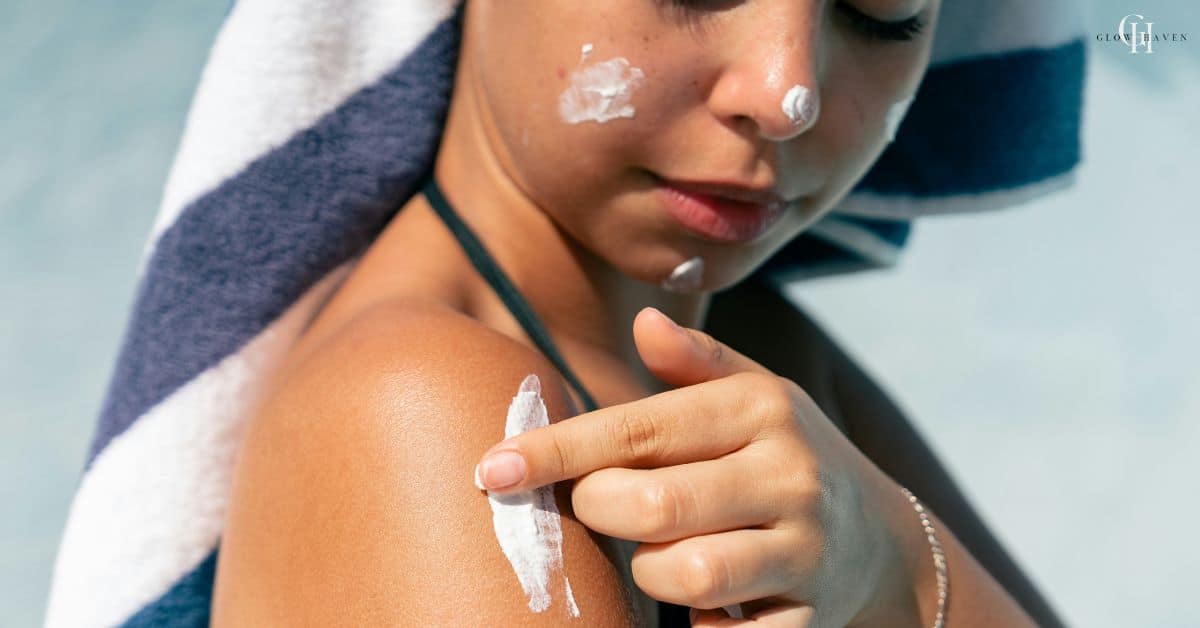
So how does SPF actually work and what does it have to do with UVA vs UVB protection?
SPF stands for Sun Protection Factor, and the number tells you how long you can stay in the sun without burning compared to being unprotected.
For example, SPF 30 allows you to stay out 30 times longer than if you were not wearing any sunscreen. But in my opinion, it is better to think of it like this. SPF 30 blocks about 97 percent of UVB rays while SPF 50 blocks around 98 percent. So the difference between the two is actually very small, which is exactly why I always say, why not just go for the SPF 50?
Many of us think that SPF 50 is “too much” or that it will stop us from tanning, but as I explained earlier, you can still tan with sunscreen on. So there is really no reason not to choose the higher protection.
And no, SPF 15 is not really enough if you are spending any significant time outside.
Chemical vs. Mineral Sunscreen
You might have noticed sunscreens being labeled as either chemical or mineral (also called physical). Both protect your skin from UV damage, but they work in slightly different ways. Understanding the difference between UVA and UVB protection is important when choosing sunscreen, because broad spectrum formulas are designed to protect your skin from both types of UV damage.
Chemical Sunscreen
Chemical sunscreens absorb into the skin and convert UV rays into heat before they can damage your skin. They are usually more lightweight and invisible on the skin, making them a great base under makeup.
Mineral Sunscreen
Mineral sunscreens contain ingredients like zinc oxide or titanium dioxide. They sit on top of the skin and reflect UV rays away, almost like a shield. Mineral formulas are often better suited for sensitive or reactive skin because they tend to be more gentle. They can sometimes leave a slight white cast depending on the formula, but modern formulas have improved a lot in this area.
Which one is better?
So which one is better? Honestly, neither is universally better. It really depends on your skin type and what you prefer. Chemical sunscreens are usually lighter and easier to wear daily, especially under makeup. Mineral sunscreens are often recommended for sensitive or reactive skin. The most important thing is not which type you choose. It is that you actually wear sunscreen every day.
If you are looking for good sunscreen options, I have added some of my personal favorites to my ”Suncare & Tanning” collection in my Klarna Creator shop. You can browse them here.
The good news is that suncare has come a long way. Most of today’s sunscreens are not thick, greasy, or overly white anymore. Many of them now come with skincare benefits like hydration, antioxidants, or soothing ingredients. And some even smell amazing.
You will also find SPF in your favorite face creams, serums, and makeup products. But I find it worth mentioning that SPF in makeup is not enough on its own. Think of it as a bonus layer. You should always start with a proper sunscreen underneath your makeup for full protection.

Suncare as a Daily Routine
Suncare is not just about avoiding sunburn. It is about protecting your skin long-term from wrinkles, pigmentation, and more serious conditions like skin cancer. It is one of the simplest yet most powerful things you can do for healthy, glowing skin. Understanding UVA vs UVB and how sunscreen actually works is one of the best things you can do for your skin.
A solid daily suncare routine is one of the best habits you can build, not just in summer but all year round. Apply sunscreen every morning as the last step in your skincare routine, even if it is cloudy or rainy. Reapply every two hours if you are spending time outdoors. And do not forget those easy-to-miss spots like your ears, neck, chest, and hands.
So whether you are enjoying the spring sunshine from your couch, sitting on a plane, or simply heading out for a walk, make sunscreen your non-negotiable.
Your skin will thank you for it later.
UVA vs UVB: Frequently Asked Questions
Which is worse, UVA or UVB?
Both UVA and UVB rays damage the skin, but they affect it in different ways. UVA rays penetrate deeper into the skin and contribute to premature aging, while UVB rays affect the surface and cause sunburn. Both increase the risk of skin cancer, which is why using a broad-spectrum sunscreen that protects against both UVA and UVB is essential.
Do UVA rays cause tanning?
Yes. UVA rays contribute to tanning by oxidizing existing pigment in the skin. However, they also play a major role in premature aging and long-term skin damage.
Does sunscreen protect against UVA and UVB?
Broad-spectrum sunscreen protects against both UVA and UVB rays. This type of sunscreen helps prevent sunburn, premature aging, and long-term skin damage. So when choosing a sunscreen, make sure it offers protection against both.