A simple Winter Body Care Routine for Soft and Calm Skin



Winter always seems to settle into the skin before it settles anywhere else. I notice it in those small moments when my legs feel slightly tight after a shower or when my arms suddenly feel a little rougher. There is also that quiet itch that appears when the air becomes dry. It almost feels as if my skin is the first one to announce that the season has changed.
When the winter months and the cold arrive, it becomes the right time to switch from a light summer body lotion to something richer in texture that keeps the skin soft and calm. In this blogpost I will walk you through the simple steps that are non negotiable for me during the winter season. These are the habits that keep my body skin feeling smooth, nourished and comfortable even during the coldest days. And, I believe most of us want to keep that soft and calm feeling on our body as well, right?
Small habits that dry out the skin
Some small everyday habits can make your skin feel drier without you realising it. Long and hot showers feel comforting, I know, but the heat dissolves the skin’s natural lipids more quickly. These lipids help protect your skin barrier, so when this layer weakens the skin loses water faster and becomes more dry.
It can also feel really tempting to scrub rough patches strongly in the shower, but it is good to remember that this often irritates the surface, especially when the barrier is already stressed from the cold. Leaving the skin bare for too long after showering has the same effect, because water evaporates almost immediately once you step out of the bathroom.
So if you want to keep your winter skin soft and calm, being mindful of these small habits already makes a big difference. When you follow the steps below, your winter body will thank you. So giving attention to these little habits helps your skin stay soft and calm even when the weather is not.
Dry brushing before the shower
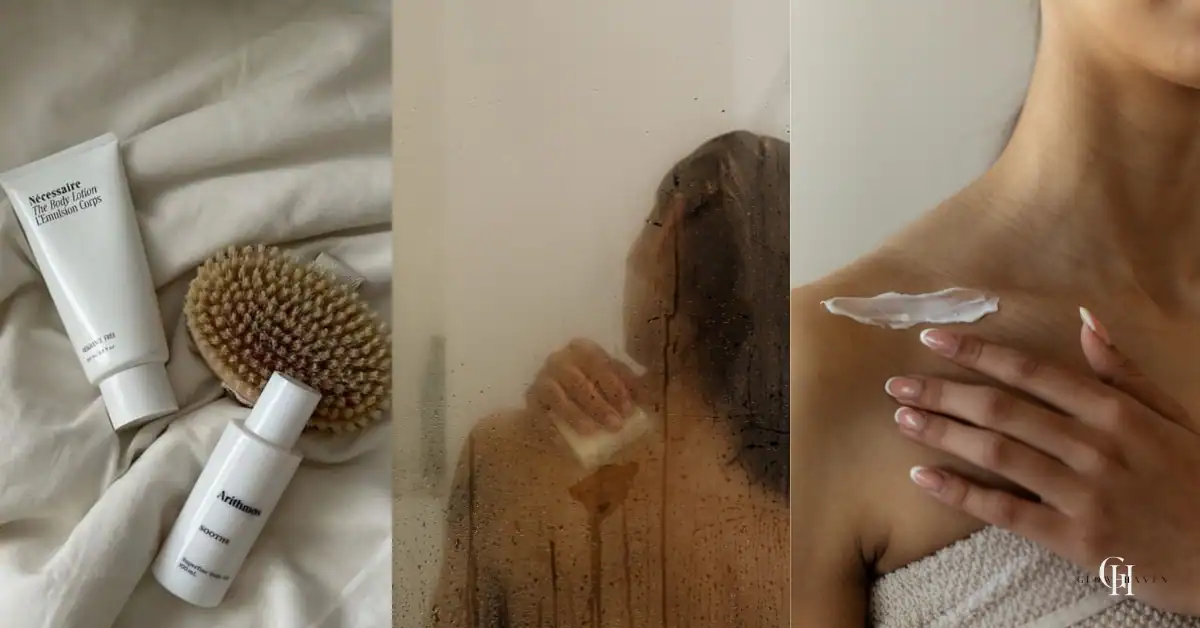
Before you enter the shower, I really recommend trying dry brushing. Dry brushing is a calming and helpful way to wake up the skin, especially during winter. It has become one of my favourite little treats for my body skin. It is quite underrated, but once you get it into your routine it becomes one of those steps that is hard to stop doing. You will understand my excitement for it once you feel the difference it makes.
Dry brushing is done on dry skin using a soft brush or glove and moving with slow and long upward strokes towards the heart. Begin at your ankles and move upwards with light and gentle pressure. The goal is not redness or discomfort. The goal is simply to wake up the skin in a soft and mindful way. The movement creates a light stimulation on the surface and increases circulation, which gives the skin a warm and energised feeling. It also helps loosen dry flakes on the top layer of the skin so the surface feels smoother even before you shower.
Dry brushing supports the skin without relying on strong pressure or water, which is why many people enjoy the way it makes their skin feel more awake and responsive. It does not replace exfoliation completely, but it can help extend the time between stronger treatments and make your weekly exfoliation work even better.

A calm moment in the shower
The shower sets the tone for your whole routine, especially during winter. A creamy or gel like cleanser often feels more comfortable because it cleans the skin without stripping away too much of its natural moisture. A very foamy cleanser usually means stronger surfactants, and these can leave the skin tight or dry.
Hot water softens the lipids that protect your skin, so even if it feels relaxing in the moment it is better to keep the water warm and not hot. When the temperature stays gentle, the skin holds on to more of its natural balance and feels calmer after you step out.
Gentle exfoliation in winter
Exfoliation will help the skin feel smoother in winter, but it must be gentle. Exfoliators with lactic acid or urea are both helpful options because they work softly on the skin. Lactic acid helps loosen the bonds between dead skin cells so they shed more easily, while urea softens the surface and attracts water into the skin. This combination smooths rough texture without irritating the barrier. Some exfoliators contain both lactic acid and urea, which can give a very balanced and effective result. A product that includes only one of these ingredients is also a great option. Once a week is usually enough for most skin types. If your skin feels extra dry or sensitive, waiting longer between exfoliation sessions often leads to better results. The idea is to support the skin, not pressure it.
Moisturizing while the skin is damp
The most important moment in your routine happens right after you step out of the shower. When your skin is slightly damp, the surface still holds water, and applying your moisturizer immediately helps seal that hydration in. If you wait too long, the water evaporates and the skin becomes dry again.
A lotion will be enough for many people on regular winter days because it brings both moisture and softness. If your skin feels tight after showering or you notice flaky patches, a richer cream will feel more protective. A cream can also be helpful if your skin is naturally dry, if the indoor air is very warm and dry, if you shave often or if your clothes create friction during the day. Creams have more oils and more protective ingredients, which gives the skin a deeper and more lasting comfort. Creams with ceramides or ectoin can be especially good in winter because they support the barrier and help the skin stay hydrated for longer.
On especially cold days, pressing a small amount of squalane or a lightweight body oil on top of your moisturizer can make a noticeable difference. Oils help slow down how fast water leaves the skin and keep the surface calm and soft. An important thing to remember is that oil is not a moisturizer on its own. It does not bring water into the skin. It only helps hold the moisture that is already there. This is why applying your lotion or cream first is so important, and the oil becomes a helpful last step rather than a replacement.

Everyday habits that help the skin
Small daily habits can make a surprisingly big difference during winter. Wearing a soft layer under wool clothing helps reduce friction on the skin and keeps it more comfortable throughout the day. A humidifier adds a little moisture back into the air at home, which slows down how quickly the skin loses water. Keeping showers a bit shorter on very cold days also helps the barrier stay calm. Adding a little extra moisturizer after shaving can prevent that tight and reactive feeling. These gentle habits work quietly in the background and make your whole routine feel a little easier and a little more supportive.
A soft winter routine
Winter body care does not need to be complicated. A few gentle and consistent steps can help the skin stay soft, comfortable and balanced throughout the season. Your body responds well to calm support, and when you give it that, it becomes more resilient and much more comfortable to live in. A simple routine is often all you need to feel cared for, even on the coldest days of winter.